Yep. Physically guide Quaddle through a motion, and it remembers what you taught it and can replay it. No coding required.
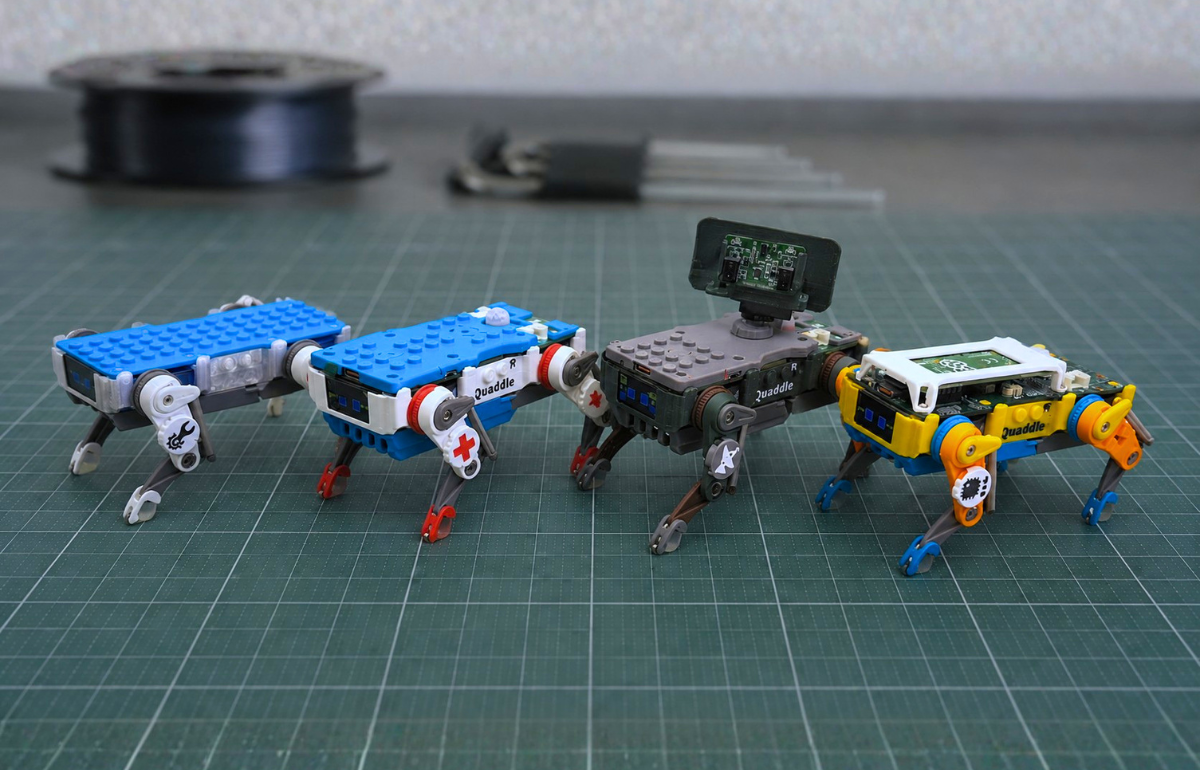
But teaching it tricks is just the beginning.
Quaddle can walk, flip, skate, crab-walk, and even right itself if it falls over. And apparently regular floors weren’t enough. It can walk upside down on a magnetic ceiling using magnets in its feet.
Four legs are just the starting point.
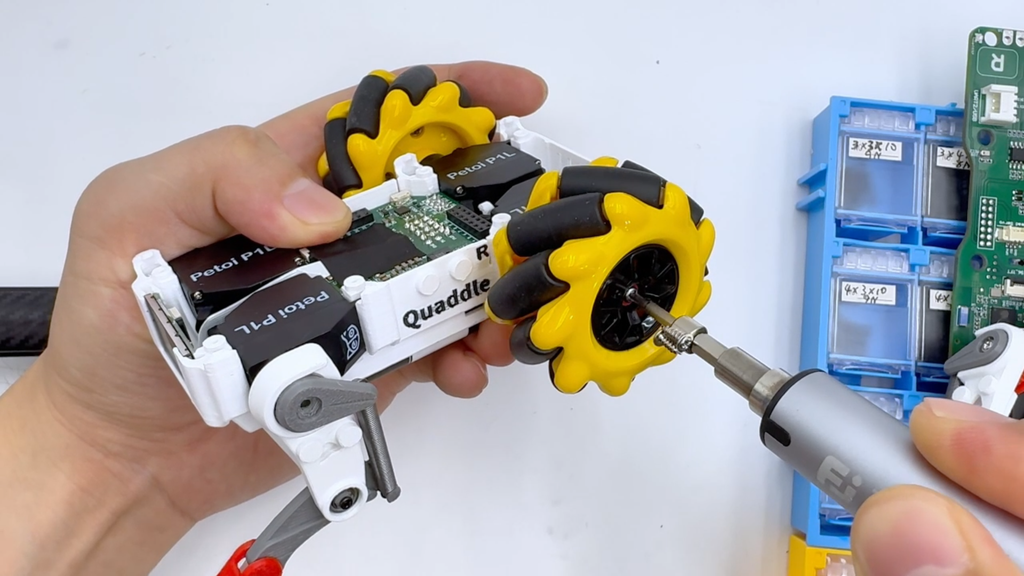
With accessories, Quaddle can transform into a biped, a tricycle, or even a four-wheeled car.
It can copy your movements.
Using a webcam, Quaddle can track your pose and mirror your movements in real time. Raise an arm, shift your body, or strike a pose, and Quaddle follows along.
You can make your own accessories, too.
Quaddle is designed for tinkering. You can 3D-print shells, mounts, and accessories, and it even has LEGO-compatible mounting points for adding your own creations.
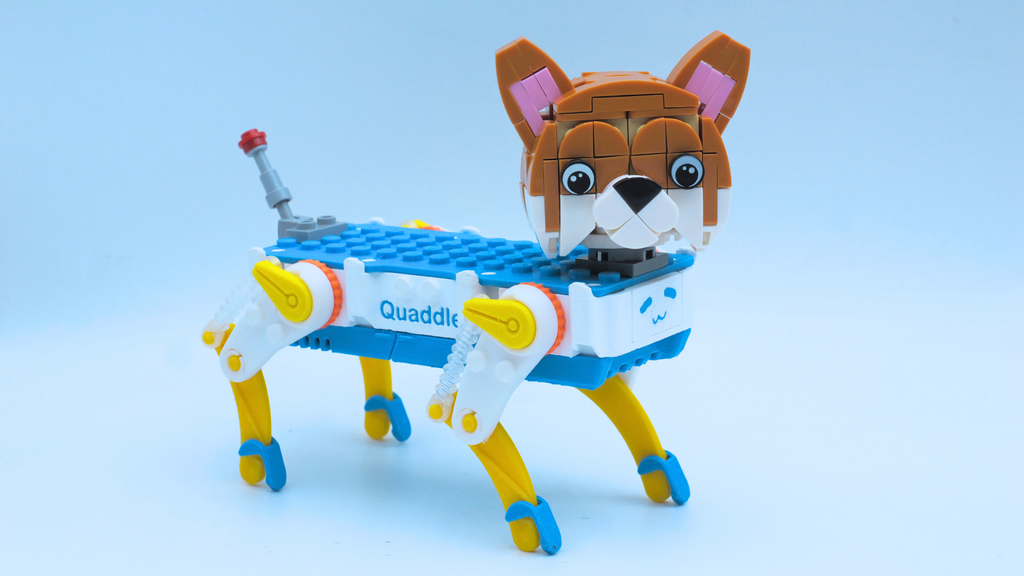
Quaddle is built for learning robotics and coding.
Beginners can start with block-based programming, then move into Python and C++ as they learn more. Underneath it all is Petoi’s open-source OpenCat platform, so there’s plenty of room to experiment.
So, when can you get one?
Quaddle is currently live on Kickstarter, with Petoi targeting early December 2026 for delivery.